Underground-Homes.com
Underground homes or earth-sheltered houses, as some call them,
reside beneath the Earth's surface (at least partially). These
houses are inexpensive to heat and cool since the surrounding
soil acts as nature's insulation. Those who design underground
dwellings have come up with several methods for regulating the
temperature.
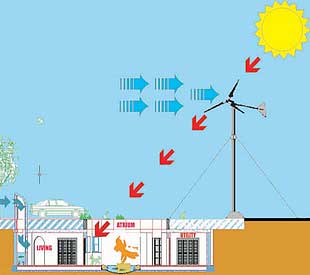 Underground Home with wind turbine
|
Underground buildings (at least some) depend upon the soil
that surrounds the walls and floors (or even ceilings) to
provide insulation. Others, however, have tubes channeled
through them to bring in fresh air. Still others use a heat
pump to regulate temperatures.
|
Most underground dwellings are made of concrete. In some parts
of the country (or world), one can expect to pay 10-percent more
for construction of these earth-sheltered structures than for
a typical home. Enthusiasts say, though, that at least 10-percent
or more is saved from lower maintenance and energy costs. Subsurface
homes are not suitable, though for northern, permafrost regions
or for most areas on flood plains.
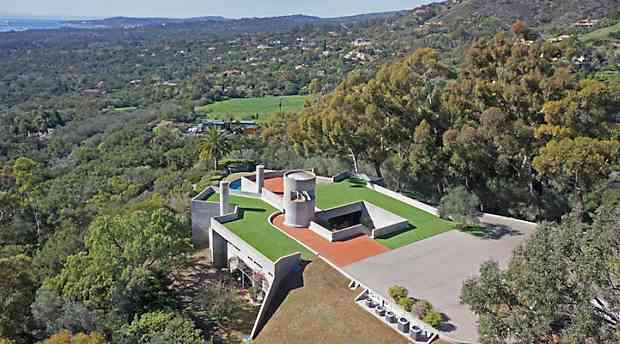
Steve Martin's Partly Underground Montecito Home (Near Santa Barbara,
CA)
Listen to the DOE ...
The U. S. Department of Energy (DOE) agrees with the energy savings
of underground or earth-sheltered homes saying, "If you are
looking for a home with many energy-efficient features that will
provide a comfortable, tranquil, weather-resistant atmosphere,
an earth-sheltered house could be right for you."
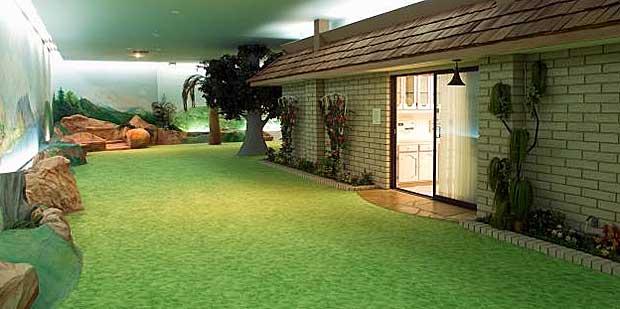
Underground Home in Las Vegas
The DOE differentiates between underground houses, which are
almost completely below the surface of the topsoil and earth-berm
homes which may have one or two sides exposed, such as elevational
and penetrational houses.
Advantages ...
Some other advantages of building underground are lower insurance
premiums, natural sound insulation, less susceptibility to fire,
high winds, hailstorms and tornadoes to name a few. Privacy is
another issue stated by underground dwelling enthusiasts and homeowners,
which has lured them to build below the surface.
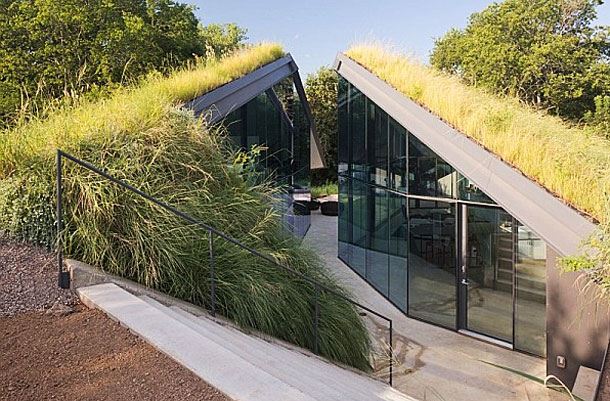
Modern Underground House
If you happen to be a fan of underground or earth-berm homes,
we have something for you at our "above the fray" Internet
habitat. If you keep checking back we may even surprise you with
a few things you hadn't anticipated as well. Hint, hint,
keep checking back.
And, we promise not to compromise and will not to keep this
information undercover. Did I mention that we're heavy into humor
around here?
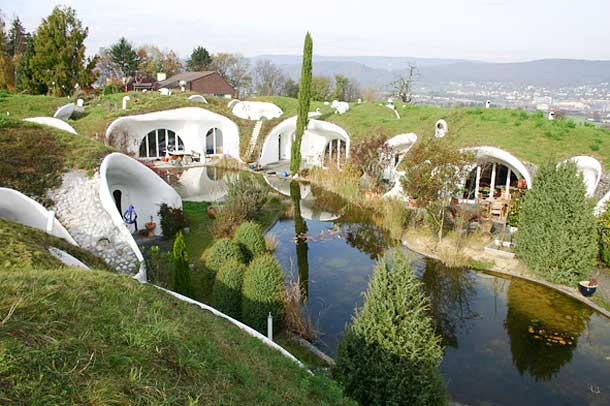
A Community of Underground Homes
I know some of you who will dig that. Oh, the humanity!
Fun Facts about Underground Homes
At present there are over 6,000 underground homes in the United
States.
Underground America Day is celebrated May 14 every year.
Coober Pedy is a community in Southern Australia that lives underground
because of the 100-plus temperatures in the summer.
Comedian and actor Steve Martin is one of the A-list celebrities
to own an earth sheltered house.
Updated October 07,
2015
|