Cave Homes
It's so easy even a caveman can do it - owning one or more cave
homes that is. The evidence of man living in subterranean caves
dates back to the Paleolithic Age. The essence of this age was
that man lived in small groups and mostly took refuge in caves
at night.
|
It is from here the concept of cave homes
came into existence (and ironically enough it is still with
us today). But, whatever little we know about primitive
cave dwelling is from what scientists have found after excavating
those caves.
|
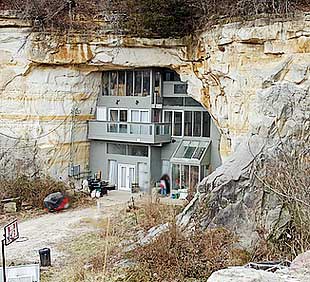 Cave Home in Missouri
 |
In modern times, the concept of cave homes has transformed into
a plush, sophisticated and comfortable houses. Such cave homes
can be seen in Spain, USA, Australia, Morocco and in other Mediterranean
countries. All these subterranean houses provide all the modern
conveniences, good ventilation and spectacular views.
The primary structures of these cave homes are all natural materials
and they are very effective in maintaining a constant temperature.
Caves vary in size like from a simple three room cave to a big
cave comprising a dozen rooms which is likely to accommodate three
generations of a family.
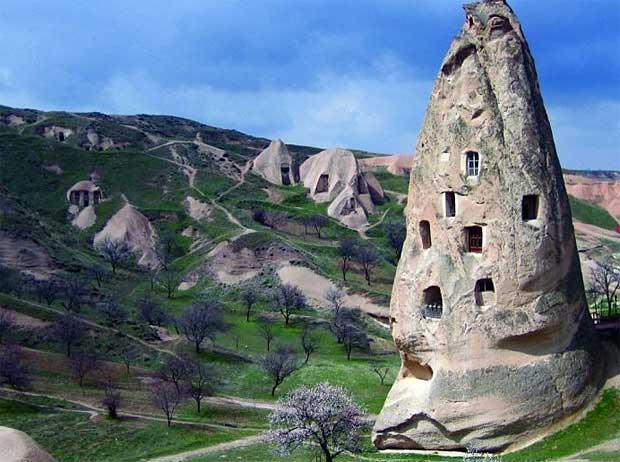
Cave Houses
What, Have You Been Living in a Cave All Your Life ...
Cave living is very different from living in a conventional house.
Walls in cave homes are thick and the rooms are large in size
with very high ceilings and a number of doorways leading to other
rooms. The doors and windows are always in the front side of the
house.
Among the famous cave homes, the Curtis Sleeper Caveland in Missouri
(pictured at top of page) has come into the forefront because
of the recent media exposure. Caveland is spread across 17,000
square feet and is spacious, beautiful.
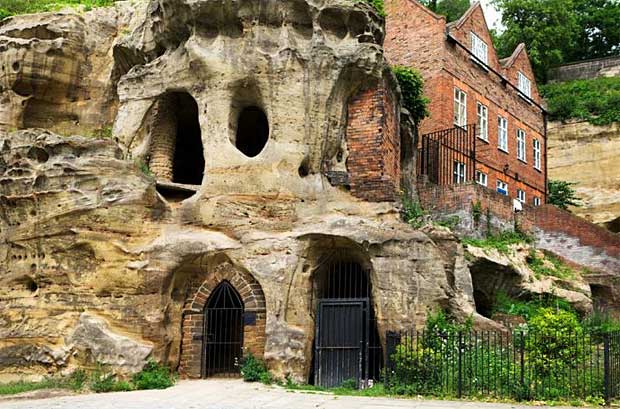
Cave Dwelling
Sleeper Cell ...
It belongs to William Curtis Sleeper, his wife and their three
kids. According to Sleeper, their house is eco friendly as no
artificial heating or cooling is required because of the natural
insulation of the cave walls. The house is lighted with fluorescent
bulbs and the flooring is done with re-cycled wood of an oak tree
which makes it really attractive.
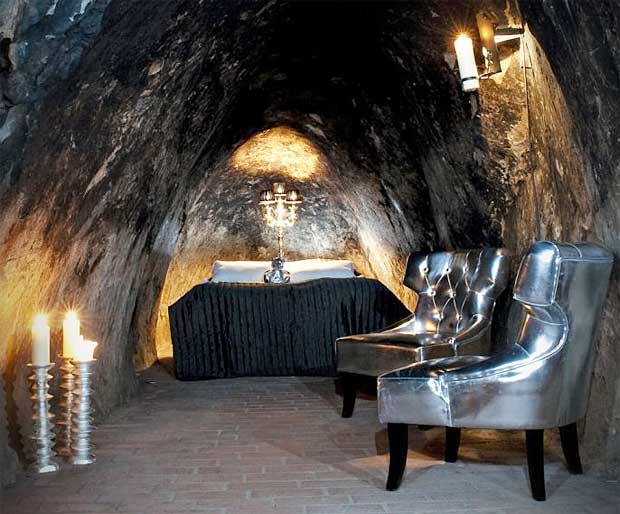
Cave Bedroom
There are large windows in the rooms which maximize natural light.
The front of the cave provides a natural opening to the house.
At the back there is a laundry, a storage room and a spare bath
room. But Sleeper is facing a crisis where he is compelled to
give up his distinctive house. So in order to rescue his residence
he has been talking to some investors to finance him in order
to stay put in his place.
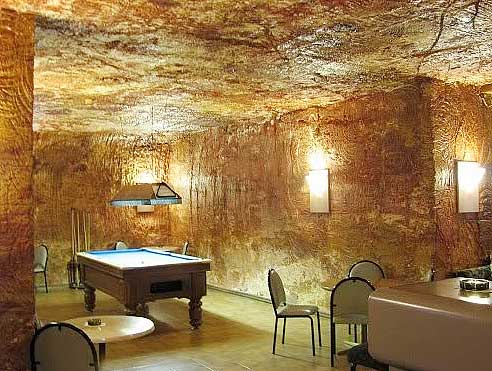 |
The other notable cave homes can
be found in Coober Pedy, in South Australia. More than half
of the population in this area lives in subterranean cave
homes.
|
Mine Your Business!
These cave homes have evolved from the existing mines and the
advantage of building such homes is that it is relatively cheaper.
Thus we can see it is not only Batman who can have his 'Bat Cave'
beneath his Wayne Manor, but a cave home is a reality which is
not only cost effective and energy efficient but versatile also.
|